




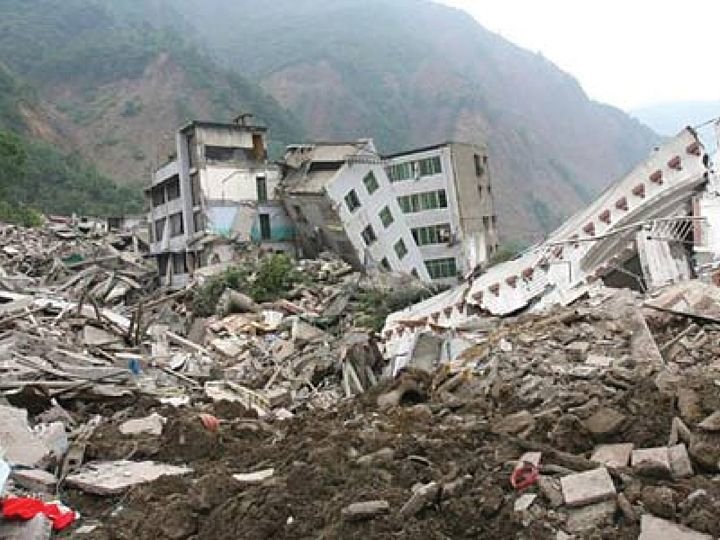
In Indonesia an earthquake can change an ordinary morning into an emergency in a matter of seconds. That truth was particularly apparent in August 2026 when a massive earthquake Indonesia Quake struck near Flores, causing havoc with continued aftershocks and further tremors. A report was issued August 20 for a magnitude 5.9 quake in the Flores region, at a shallow depth of 10 kilometers.
For those seeking for the Indonesia earthquake today, the main question generally isn’t simply the number on the seismometer. They want to know where it happened, how strong it was, if a tsunami is conceivable, what damage has been done and if there will be more shaking.
In this tutorial, we’ll explain where we are now, why so many earthquakes happen in Indonesia, how earthquake magnitude works, what Indonesia earthquake alerts signify and what residents and travelers should do when the ground starts shaking.
Indonesia Earthquake: What’s the Situation in Flores?
The last significant earthquake sequence has been located in eastern Indonesia, especially the Flores region and sections of East Nusa Tenggara.
— A 7.7 magnitude quake happened near Flores on Aug. 15, 2026. The U.S. Geological Survey put the epicenter about 68 kilometers (42 miles) north-northwest of Ende and registered the tremor at a shallow depth. The shallow location intensified the earthquake and contributed to heavy damage to adjacent villages.
Recovery has been challenging due to the disaster. On August 20 reports stated at least 73 people had perished, more than 900 were injured and nearly 60,000 displaced Indonesia Quake. There have been thousands of aftershocks, but only a handful strong enough to be felt by inhabitants.
News from the Indonesia earthquake may change from update to update because the situation is still developing. Teams arriving in remote villages may find more destruction, with aftershocks posing new threats even after the original quake has passed.
The August 20, 5.9 magnitude earthquake in Flores is another reminder that an earthquake sequence doesn’t always end with one big event. That doesn’t necessarily indicate an even bigger quake is on the way, but residents in impacted areas should continue to heed official directions and stay away from damaged buildings.
Why is Indonesia so prone to earthquakes?
Indonesia’s seismic risk is no coincidence. The country is situated in one of the most complex tectonic settings in the world.
The Indonesian archipelago is located in the convergence of many major tectonic plates, including the Indo-Australian, Eurasian, Pacific and Philippine Sea plates. BMKG has also identified many active faults throughout the country. The continuous movement sets up conditions where stress can build up underground and finally be released as seismic energy.
Indonesia is also part of the Pacific Ring of Fire, a huge zone of violent tectonic and volcanic eruptions.
One major process is subduction. Basically , one tectonic plate goes under another . In some places of Indonesia the Indo-Australian plate is being pushed under the Eurasian/Sunda plate. The motion is not everyplace smooth. Friction can hold parts of the boundary in place while pressure builds up. Eventually the rocks slide . You get an earthquake .
So, that’s why an earthquake in Indonesia can happen out in the ocean, under a major metropolis, near a volcanic area, or on an inland fault.
What does the magnitude of the Indonesia earthquake mean?
People sometimes read headlines about earthquakes saying magnitude 5, 6, 7 and think they can compare them by just adding or subtracting numbers.
That’s misleading.
Magnitude measures the size of the earthquake’s seismic Indonesia Quake source. The scale is logarithmic, so modest increases in the numerical value indicate considerably larger changes in the energy released.
More crucially, magnitude is not the same thing as intensity.
Factor What it tells you Magnitude The overall size of the earthquake. Depth How far below the surface the rupture occurred. Distance How close a location is to the source. Intensity How strongly people and structures experienced shaking. Ground conditions How local soil can amplify shaking. Building quality How well structures withstand movement.
A magnitude 6 quake near a city can do a lot of damage, although a larger one far offshore may have a different effect. Depth matters also. Shallow earthquakes can generate strong shaking near their epicenter because they lose less seismic energy before it reaches the surface.
The August 2026 Flores earthquake destroyed so much, even in settlements separated over rough terrain, because of how the quake moved. Landslides, ruined roads, lost communications and isolated villages made emergency response more difficult.
Indonesia Earthquake Warning: Does It Foretell Earthquakes?
This is one of the most misunderstood elements of earthquake protection.
The warnings of earthquakes in Indonesia do not Indonesia Quake mean that scientists can forecast exactly when a huge quake would hit.
The BMKG has repeatedly clarified that the discussion of the potential for severe megathrust zones should not be understood as a prediction of a large earthquake to come. A known seismic gap is a long-term hazard, not a short term prediction.
There is an essential contrast between early warning and prediction.
Earthquake prediction means knowing where, when and how strong an earthquake will be, before it happens. That’s something scientists can’t reliably do today.
Earthquake early warning is a different matter. It can detect an earthquake once it has begun, and can offer a small warning before more intense shaking reaches further away.
It may be for a short period yet it might still count Indonesia Quake People may be able to move away from hazardous equipment, halt operations, take protective action or initiate automatic safety processes.
Official warnings are vital, especially for tsunami risk. A powerful offshore quake can alter the bottom and cause deadly waves, although not every offshore quake triggers a tsunami.
What To Do During Earthquake?
The best thing you can do isn’t rocket science.
If shaking begins while you are indoors, Drop, Cover and Hold On. Get down, if you can get under a substantial piece of furniture, cover your head and neck. Stay away from windows, glass, shelves, or anything that can fall.
If the building is shaking, don’t head for the stairs. Exits can be more risky than staying in a protected place.
If you are outside, walk away from buildings, walls, utility poles and trees and anything else that could fall down or drop debris.
If you are driving, slow down and pull over to a safe area. Do not stop under bridges, electrical lines, signs or anything that could fall.
But the threat may not be ended when the tremors stop.
Check yourself and others for injuries. Check for fire, damaged electrical systems, leaky gas, and structural problems. Expect aftershocks. Don’t reenter a badly damaged structure because the first earthquake is over.
If you are near the coast and feel severe or long-lasting shaking, go away from the coast or to higher ground if authorities warn of a tsunami risk. Don’t wait to see the ocean.
Indonesia’s earthquake history shows need for preparedness
Indonesia has a long, traumatic history of quakes.
BMKG has a collection of damaging earthquakes and tsunamis from 1821 to 2025. The historical record shows that severe earthquakes have happened regularly in different parts of Indonesia.
The 2004 Aceh earthquake and tsunami is one of the most devastating disasters in contemporary Indonesian history. Other large earthquakes have struck Sulawesi, Lombok, Java, Sumatra, Flores and other areas.
History also presents an essential limitation: written records do not document every earthquake that occurred centuries ago. The BMKG states that the instrumental and historical earthquake data cover just a narrow time span, compared with the perhaps considerably longer recurrence intervals of significant earthquakes.
The absence of a recent devastating earthquake in a particular place should not be used as confirmation that the area is safe.
Common Mistakes People Make During an Earthquake
One of the most deadly assumptions is that the largest earthquake has already occurred.
Some aftershocks are large enough to cause extra damage to structures already weakened by the original shock. In the disaster at Flores in August 2026, hundreds of aftershocks were recorded, impeding rescue and recovery efforts.
Another error is turning to social media for the first and last word in an emergency. Posts can go viral but they can also get a place wrong, or report casualties that are no longer accurate, or make outlandish claims about a tsunami, or get the earthquake magnitude wrong.
For credible updates, check official sources such as BMKG and Indonesia’s disaster-management authorities.
A third mistake is returning too soon to damaged properties. Cracks, leaning walls, damaged foundations, and faulty utility connections might point to problems that aren’t apparent.
How Families Can Prepare for the Next Indonesia Earthquake
You don’t need fancy tools to prepare.
Begin with the basics:
Identify safe locations in your home.
Never place heavy items near beds or in heavy use areas.
If possible, secure tall furniture.
If required, learn how to shut off electricity, water and gas.
Keep shoes, a flashlight, water, needed medications, and basic emergency supplies within reach.
Have a plan for how family members will communicate if mobile networks are congested.
Live near a coast subject to tsunamis? Know the safest evacuation route.
Make sure you have essential papers backed up securely.
“In a real emergency, don’t rely on memory, practice earthquake drills.”
SPECIAL ATTENTION IS DUE TO THE QUALITY OF CONSTRUCTION. An earthquake does not damage buildings only because they are old. Risk can be increased by poor design, weak construction, unsuitable materials, ground conditions, and inadequate reinforcement.
The seismic design requirements that are in place locally are about safety, not technicalities, for both residents and developers.
What the Recent Earthquake Teaches Us
The ongoing Flores sequence is a hard but useful lesson. Earthquake risk does not go away when the TV cameras go away.
The first shock might harm buildings. And aftershocks can make them more unstable. Landslides can close roads. Power and communication can be lost. Remote settlements are often hard to access. Others may not be physically affected, but they may be displaced, lose income, have their education disrupted and endure protracted uncertainty.
So the answer has to be more than rescue.
Communities need safe buildings, dependable communications, functional evacuation routes, emergency supplies, citizen education, and realistic exercises. Authorities also require precise seismic mapping and constant monitoring of active faults and earthquake-prone areas.
An example of this approach is the work of BMKG on seismic microzonation . These studies look at the local ground conditions as two neighborhoods within the same city may experience varying levels of shaking based on the soil and geology beneath them.
Indonesia Earthquake Frequently Asked Questions
Was there an earthquake in Indonesia today?
Yes. On August 20, 2026, a 5.9 magnitude earthquake shook the Flores region at a depth of about 10 kilometers. It was after the considerably greater magnitude 7.7 earthquake that hit the region on August 15.
What was the strongest Indonesian earthquake recently?
The main recent incident was the magnitude 7.7 earthquake near Flores on 15 August 2026. It caused destruction and deaths in East Nusa Tenggara.
Can Indonesia foresee the next big quake?
Not at all. Scientists can spot earthquake threats and keep an eye on seismic activity, but they can’t consistently predict when and where the next big one will happen.
Can an earthquake in Indonesia trigger a tsunami?
Yes, but not all earthquakes do. The risk of tsunamis relies on the location, depth and size of the earthquake, the movement along the fault and whether the seafloor is shifted or not.
What to do after an earth quake?
Check for injuries, get away from critically damaged buildings, look for fires and risks from utilities, expect aftershocks, and follow official orders. If you live in a coastal location and receive a tsunami warning, evacuate as instructed by officials.
Where can I get news on earthquakes in Indonesia?
One of the main sources to follow for official information about earthquakes is BMKG. Its earthquake services include data on recent seismic activity, and its tsunami monitoring system issues official warnings when appropriate.
Why are there so many earthquakes in Indonesia?
Indonesia is at the junction of multiple active tectonic systems. In many regions of the country, earthquakes are a perennial natural danger as seismic activity is continuously generated by subduction zones and active faults.
Are a sequence of aftershocks a warning of an even greater earthquake?
Not necessarily.” Aftershocks are typical after a large earthquake , but aftershocks in and of themselves are not evidence that a stronger earthquake is coming . “Residents are advised to stay alert and track updates from official sources, rather than rely on forecasts being shared on social media.”
Also Read More: Boho Fashion in 2026 How to Build a Modern Bohemian Wardrobe That Feels Like You
Prepared for What’s Next Outside the Headlines
Panic is not the best response to an Indonesian earthquake. It’s good information on which to prepare.
The unfolding crisis on Flores shows how rapidly the impact of an earthquake can spread from destroyed structures to blocked highways, lost communications, displacement and challenging rescue operations. It also explains why shallow earthquakes and aftershock sequences demand considerable attention.
If you are tracking the latest information on the earthquake in Indonesia, be sure to check the location, magnitude, depth, tsunami status and government emergency guidance before passing it on to others. At home, secure heavy furniture, have basic emergency supplies and know where to take shelter in an earthquake.
Earthquakes are unavoidable for Indonesia. However it can lower the number of individuals involved in earthquakes. But it can lessen the number of injuries and the magnitude of infrastructure damage. and how much infrastructure is destroyed. The best protection is a mix of safer building, increased public knowledge, reliable warnings, excellent emergency preparedness and communities that know what to do before the ground starts to shake.