




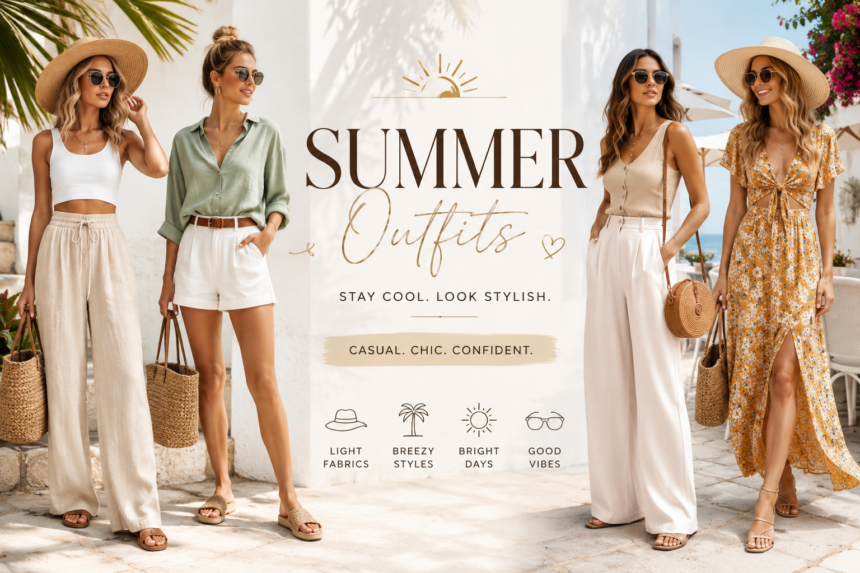
The hardest part of getting dressed in summer isn’t finding something cute; it’s finding something that still feels good after you’ve been outside for an hour. A fantastic outfit can look effortless in the morning yet become uncomfortable once the temperature rises, humidity kicks in, or your plans unexpectedly take you from a sunny street to an aggressively air-conditioned restaurant.
That’s why the best summer outfits balance three things: comfort, practicality, and personal style. Fabric matters. Proportion matters. Shoes can significantly impact the overall appearance of a simple outfit. Even the difference between a loose shirt and a fitted one can entirely change how comfortable you feel.
This guide brings together practical summer outfit ideas for different occasions, body preferences, and style personalities. You’ll find ways to build casual looks, dress up without overheating, work with current summer fashion trends, and create outfits from pieces you probably already own.
How to Build Better Summer Outfits
Start with the weather, then think about the occasion. It sounds obvious, but it prevents many common styling mistakes.
Lightweight fabrics such as linen, cotton, and certain breathable blends are usually more comfortable in hot conditions than heavy denim, thick synthetics, or multiple tight layers. A loose silhouette can also improve airflow, although extremely oversized clothing isn’t always practical for commuting, working, or windy weather.
Color can influence how an outfit feels visually, too. White, cream, pale blue, soft green, and other lighter shades create a distinctly summery appearance. That doesn’t mean dark clothing is off-limits. Black shorts with a relaxed white shirt, for example, can look sharper than an outfit built entirely around pastels.
The easiest formula is simple: choose one breathable base, add one useful layer if needed, and finish with comfortable footwear. From there, accessories can provide personality without adding much bulk.
Summer Outfits for Women
Summer outfits for women don’t need complicated styling. A few dependable combinations can cover everything from errands to dinner.
A relaxed linen or cotton dress is one of the easiest choices. Pair it with flat sandals and a small shoulder bag for daytime, then swap in simple jewelry and slightly dressier shoes for the evening. The beauty of a dress is that it creates a complete outfit without requiring separate decisions about tops and bottoms.
For a two-piece option, try wide-leg trousers with a fitted tank or tucked-in lightweight shirt. The contrast between a relaxed bottom and more streamlined top keeps the outfit from looking shapeless. You can also achieve a defined waist with high-waisted trousers without having to wear tight clothing.
A midi skirt works in much the same way. Pair it with a simple T-shirt for a relaxed look or a sleeveless blouse for something more polished. Denim shorts remain useful for casual days, but they don’t have to be extremely tiny. A longer, relaxed pair can feel more versatile and easier to style.
For adorable summer outfits, details often matter more than expensive pieces. A woven bag, colorful scarf, sunglasses, simple earrings, or a patterned top can transform basic clothing.
Summer Outfits for Men
Summer outfits for men become much easier when you stop treating shorts and T-shirts as the only options.
A lightweight button-down shirt with tailored shorts is a dependable combination for warm-weather lunches, vacations, and casual social events. Leave the shirt untucked for a relaxed appearance, or tuck it in with a belt when you want more structure.
For a slightly smarter look, try lightweight trousers with a polo shirt or short-sleeve button-down. Loafers, clean sneakers, or simple leather sandals can change the overall character without requiring an entirely different outfit.
Linen shirts are especially useful because they can look deliberately relaxed rather than simply informal. Some wrinkling is part of their character, so there’s no need to chase a perfectly pressed appearance.
A useful trick is to pay attention to fit. Clothes that are too tight can become uncomfortable quickly in heat, while excessively baggy pieces can look untidy. A relaxed but intentional fit usually offers the best middle ground.
Casual Summer Outfits That Actually Work
Casual dressing should make getting ready easier, not create another styling challenge.
For everyday errands, try straight-leg jeans or relaxed trousers with a breathable T-shirt and lightweight sneakers. If jeans feel too warm, switch to cotton trousers, linen-blend pants, or shorts.
For women, a tank top with loose trousers is an effortless starting point. For men, a plain T-shirt with tailored shorts can look considerably more put-together than athletic shorts paired with an oversized graphic tee.
Color coordination also helps. You don’t need a perfectly matching outfit. Instead, choose one dominant neutral and add one or two complementary shades. Beige trousers, a white shirt, and brown sandals are a classic example. Navy shorts, a pale blue shirt, and white sneakers offer another.
The goal isn’t to make casual clothes look formal. It’s to make relaxed clothing look intentional.
Dressing Up Without Overheating
Summer events create a particular problem: you want to look polished, but wearing heavy formal clothing in hot weather can ruin the experience.
For outdoor dinners, garden parties, and warm-weather celebrations, prioritize breathable materials and simpler construction. A lightweight dress with low-profile sandals can look elegant without excessive layering. For men, lightweight trousers and a breathable collared shirt can provide enough structure for many semi-formal settings.
If the event has a dress code, follow that first. Fabric choice can then help you stay comfortable within the required level of formality.
Shoes deserve special attention. A beautiful outfit isn’t much use if uncomfortable footwear leaves you avoiding every step. Break in formal shoes before an event, and consider the walking conditions. Grass, cobblestones, beaches, and long city walks each call for different footwear.
A Quick Comparison of Summer Outfit Choices
Outfit combination best for comfort in heat Style level: Main consideration: T-shirt + shorts Errands, casual days, high casual Keep proportions balanced. Linen shirts and trousers are suitable for dinner and travel, but they should be worn at a high level of formality. Smart casual. Linen naturally wrinkles. Dress + sandals Daytime, vacations High casual to polished Choose breathable fabric. Tank + wide-leg pants City days, lunches High Modern casual: Consider waistband comfort. Polo + tailored shorts Social events: Medium-high, smart-casual Fit matters: lightweight blazer + trousers Dressier occasions: Medium/formal layer only when necessary
The comparison highlights an important point: there isn’t one universally perfect summer outfit. The right choice depends on heat, movement, setting, and how dressed-up you need to be. An outfit that works beautifully for an air-conditioned office may feel excessive at an outdoor festival. Likewise, beachwear isn’t automatically suitable for a restaurant simply because the weather is hot.
Summer Fashion Trends Worth Trying
Trends can be fun, but they don’t need to dictate your entire wardrobe.
Relaxed tailoring remains useful because loose trousers, oversized shirts, and lightweight structured pieces can look current while still being practical. Natural textures, understated neutrals, and breathable fabrics also fit naturally into summer dressing.
Color is another easy way to experiment. Instead of replacing your wardrobe, add one brighter item: a green shirt, coral bag, blue trousers, or colorful sandals. If you prefer understated clothing, tonal dressing can create a sophisticated appearance without loud patterns.
The best trend is usually the one that fits your existing wardrobe and lifestyle. If you rarely wear bold clothing, buying an entire neon outfit because it’s fashionable may leave you with something you don’t actually enjoy wearing.
Common Summer Styling Mistakes
One frequent mistake is ignoring footwear. People spend time choosing the perfect shirt and trousers, then wear shoes that don’t suit the weather or amount of walking involved.
Another is wearing too many layers. A light overshirt can be useful in the evening or indoors, but layering several pieces in hot weather often creates unnecessary bulk.
Fabric labels deserve attention, too. “Summer” styling doesn’t automatically mean an item is breathable. Some synthetic materials can feel uncomfortable in heat, particularly when a garment is tight. That doesn’t make every synthetic fabric bad; performance materials can be useful for sports and activewear. The key is choosing fabric according to activity.
Finally, don’t confuse revealing clothing with cool clothing. A loose, lightweight shirt can be more comfortable than a very short or tight garment. Coverage, airflow, and fabric all influence comfort.
How to Make One Wardrobe Create More Outfits
You don’t need dozens of pieces to have variety.
Choose a small group of neutral bottoms, several breathable tops, one versatile dress or lightweight trousers, and shoes that cover casual and dressier situations. Then introduce variety through color, accessories, and proportions.
For example, one pair of beige trousers can work with a white T-shirt, striped shirt, navy polo, or colorful blouse. The outfit changes even though the main item doesn’t.
This approach also makes packing easier. For vacations, select pieces that can be worn in multiple combinations rather than packing a separate outfit for every day. A lightweight shirt might work over swimwear during the afternoon and with trousers at dinner.
FAQs About Summer Outfits
What should I wear on an extremely hot day?
Choose loose, lightweight clothing made from breathable materials such as linen or cotton. Keep layers minimal and select footwear that allows comfortable movement.
Are jeans suitable for summer?
Yes, particularly during cooler evenings or mild summer weather. Lightweight or relaxed jeans tend to be more comfortable than heavy, tightly fitted denim.
How can I look stylish without spending much?
Build outfits around versatile basics and change their appearance with accessories, color, and styling. A simple shirt can look completely different with tailored trousers, shorts, or a skirt.
What are good summer outfits for work?
That depends on your workplace, but lightweight trousers, breathable shirts, midi skirts, simple dresses, and polished footwear are useful starting points. Always follow your workplace dress expectations.
What shoes work best with summer outfits?
Choose according to the occasion. Sneakers suit everyday activities, sandals work well for relaxed settings, and loafers or other polished shoes can elevate smart-casual looks.
How do I stay comfortable while dressing formally?
Look for lightweight fabrics, avoid unnecessary layers, and choose breathable footwear. If you’re attending an outdoor event, also consider how much standing and walking you’ll be doing.
Do summer fashion trends matter?
Only if they suit you. Trends can provide inspiration, but comfort, fit, climate, and personal preference should determine what you actually wear.
Also Read More: Fibermaxxing How to Increase Fiber Intake Without Overdoing It
Finding Your Best Summer Style
The strongest summer outfits aren’t necessarily the most complicated or trend-driven. They’re the ones that make sense for your day.
Start with breathable fabrics, comfortable proportions, and shoes suited to your plans. Add color or accessories when you want more personality, and borrow summer fashion trends selectively instead of rebuilding your wardrobe every season.
Whether you’re creating summer outfits for women, summer outfits for men, or simply looking for fresh summer outfit ideas, the same principle applies: dress for the weather first, then make it yours. A well-chosen shirt, comfortable bottoms, practical shoes, and one interesting detail can be enough to create an outfit that feels effortless from morning to evening