




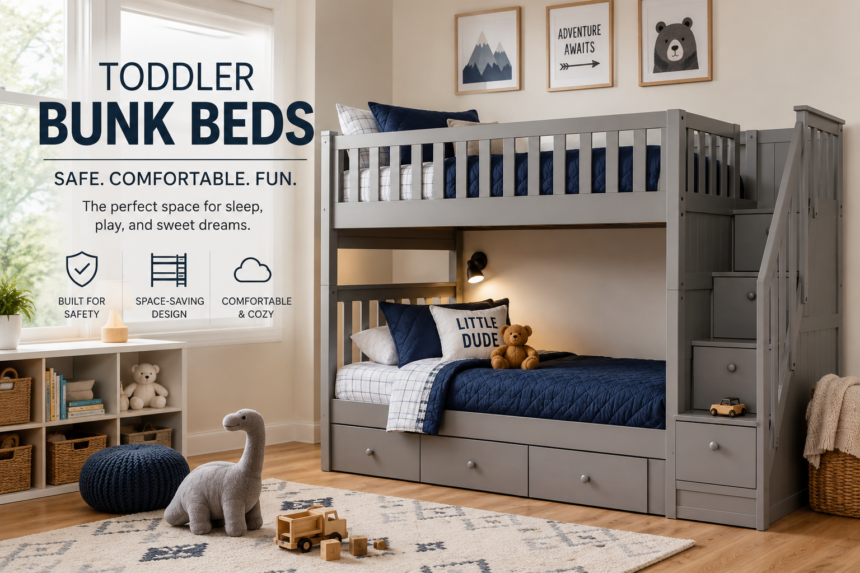
Few people choose furnishings for the small child because of the way it looks. A bed should match the space, encourage a good sleep, withstand everyday use, and most importantly, correspond to the child’s stage of growth. Toddler bunk beds are attractive because they save space and add some fun to a bedroom, but they also require more careful thot than a regular toddler bed. “Parents need to consider age, maturity, access to the upper sleeping area, guardrails, stairs or ladders, mattress fit, room layout, and how the bed will be used as the child grows. But the choice to be proper must be based on the individual child and not just on the appearance of the furniture, although for many families a bunk-style design might eventually be advantageous.
Are Bunk Beds Safe for Young Children?
The first question parents should address is not which bunk bed looks nicest, but if a bunk layout is even acceptable for their child at all. regular bunk beds have one sleeping area positioned above another. This creates a risk of falling which is different from the risk of falling from a regular low bed. Young children may not fully grasp the repercussions of climbing, changing position while sleeping or using ladders as play equipment. These hazards mean that parents should pay close attention to the manufacturer’s minimum age recommendations and relevant safety advice, rather than assuming that a device marketed to children is necessarily suitable for a toddler.
Toddler beds that sit low to the ground or sleeping arrangements on the floor are typically easier to oversee and access for very young toddlers. A bunk-style configuration may make more sense at a later time, when the youngster is developmentally ready to use the furnishings properly. When choosing bunk beds for toddlers, parents should check the manufacturer’s instructions, weight limitations, guardrail requirements and intended age range. So the safest choice is to make a decision based on the specific product and the child’s development, not a blanket assumption that all children may safely sleep in a bunk bed at the same age.
Toddler Bunk Bed Buying Guide
Construction and design are crucial considerations when a youngster gets to the point when this kind of furniture is appropriate. A quality bed should feel substantial as children get into it and toss and turn throughout sleep. Check the joints, support structure, ladder or stairs and guardrails before you buy. Also, the bed needs to be constructed according to the manufacturer’s instructions exactly. Loose fittings, missing hardware or improper installation might affect the stability of the bed.
Sturdy Frame and Reliable Support
Locate a frame of solid materials with tight connections. Children’s furniture can be made from solid wood, engineered wood and metal, but quality is more than simply the material Toddler bunk beds. Look at how the frame is made and test it lightly to see if the bed stays in place. Ensure screws, bolts, slats and other hardware are properly installed and checked occasionally especially after the furniture has been moved or rebuilt.
Correct Guard Rails
One of the most crucial characteristics of a raised sleeping surface is guardrails. They should be correctly positioned and firmly fixed, with no superfluous gaps which may lead to an entrapment hazard. The mattress should also be a proper fit for the bed frame. A mattress that is too tiny, too big or doesn’t fit the frame can provide gaps where a youngster could become trapped.
Safe Access
A ladder is not just for decoration. The design of the route a kid uses to go to a raised bed demands serious study. Wide, secure stairs or well-designed climbing access may be simpler for certain children than tiny ladder rungs. Whatever system the bed uses should be securely attached and acceptable for the child’s abilities. Teach children that climbing furniture is for climbing in and out of bed, not leaping, racing or playing.
Small Bedroom Toddler Bunk Bed Ideas
One reason families look at bunk bed choices for toddlers is restricted bedroom space. A bunk setup could provide additional floor area for toys, storage, a small workstation or play. But you shouldn’t have to sacrifice space for safe movement around the room.
In a shared bedroom, a bunk configuration may offer individual sleeping space with greater functional floor space between the furniture. Another choice is a design with storage in the lower portion, but parents should be sure that drawers, shelves and climbing aspects do not encourage harmful use. A compact stair design can also provide storage under the stairs but the whole construction should be considered for stability and age appropriateness.
When arranging the room, allow for adequate free space around the bed for children to move comfortably. Clear away any sharp furnishings in the vicinity that can injure a youngster in the event of a fall. Windows, wires, ceiling fans, heaters and other possible dangers When choosing a place for the bed, think about possible risks such as windows, wires, ceiling fans and heaters. when selecting where the bed goes.
Standard Bunk Beds vs Low Bunk Beds
Not all bunk style beds have the same height. Low bunk designs might position the upper sleeping space closer to the floor than a traditional bunk bed. This can reduce the overpowering impression of the furniture and can work especially well in places where there is limited ceiling height. Just when you’re lower, sleeping high doesn’t remove risks.
Most traditional style bunk beds offer more vertical space between the sleeping spaces, while low-profile style bunk beds provide a different tradeoff of floor space vs accessibility. Parents should compare the actual size, safety features, recommended age, mattress specifications and available clearance, not just based on photos.
Usually the simplest design is preferred by the younger child. More climbing opportunities and unanticipated uses can be generated by fascinating, complicated structures with slides, tents, climbing walls or multiple play elements.
How to Choose the Right Mattress
The mattress is a major aspect of the whole set-up. It need to be the suitable size for the bed frame and conform to the manufacturer specifications. Don’t try to cram a mattress that is not the right size into a bunk frame just because the dimensions seem near.
Parents should also think about the child’s comfort. A mattress that fits well and gives the right amount of support might help you have a more consistent sleep environment. Bedding should be fitted properly and not bunched around the sleeping space. No loose parts should touch guardrails or form gaps between the mattress and structure.
Before choosing a mattress, measure your real bed frame and determine the proportions the manufacturer recommends for a mattress. This little step can avoid complications once the furniture is already installed.
Safety habits: furniture design is not everything
Even the best-made bed needs some common sense guidelines. Bunk beds are for sleeping and regular use only, kids should know—not for jumping from one level to the next. Parents can set simple rules like using the ladder or stairs correctly, not playing rough on the bed, and not letting toys pile up on the ladder.
Regular inspections are just as crucial. Check for loose screws and nuts, broken slats, fractured components or movement in the frame. If any part is damaged, discontinue using the damaged part until it is fixed or replaced properly according to manufacturer’s advice.
And it’s good to remember that kids grow up and their abilities change. A bed that is right at one stage may not be right when the child grows, changes his behaviour, or his sleeping habits. Therefore, furniture should be re-evaluated over time, not as a permanent decision.
Common Mistakes Parents Make
One of the most typical mistakes is buying a bunk bed because it looks nice. Children’s furniture is frequently highly whimsical in its design, but the appearance tells you little about the structural strength or age compatibility. Another mistake is skipping the manufacturer’s instructions after putting it together. Even the best product can be made harmful if it is assembled wrong or modified without authorization.
Sometimes the parents forget the room itself. But a bed can physically fit in a bedroom and leave too little useable space around it. Take measurements of the space, the height of the ceiling, the location of windows and heat sources, and consider how the child will move about the furniture before you buy.
Another mistake is to consider a ladder or raised platform as a plaything. Bunk furniture may appeal to children’s natural desire to climb, jump and play. Having clear rules from the outset might also help to avoid inappropriate use.
How To Choose Toddler Bunk Beds That Grow Up With Your Child
Flexibility might be important because kids’ furniture can get pricey when it has to be replaced often. often, so flexibility might be helpful. Some bunk-style systems are meant to be separated into individual beds, so families can adjust the setup as their children grow. Some have parts that move or can be removed.
A convertible design can be helpful if it truly fits a family’s long-term needs. But parents shouldn’t buy a difficult product merely because it has more functions. Think about the use of the furniture over the years, the potential for the room design to alter, and whether each design is suitable for the child’s age.
The best kids bunk beds aren’t usually the biggest or most feature-loaded models. A practical design that suits the room, is securely built and can adapt to evolving needs can be a wiser investment.
A Simple Buying Checklist
Before you purchase a bunk-style bed for a youngster, consider these questions:
Is the product suitable for the child’s age and level of development?
Is it compliant with relevant safety requirements?
Are the guardrails constructed and placed properly?
Does the frame match the size of the mattress?
Is the ladder or stairway stable and accessible for the intended user?
Will the bed fit in the room comfortably?
Are there any dangers near windows, wires, heaters or other furniture?
Is it easy to check and maintain the frame?
Will the design be practical when the child grows up?
Are the manufacturer’s instructions for installation and maintenance clear and understandable?
By asking yourself these questions before you buy, you can avoid making a purchase based solely on looks or price.
FAQs
Are bunk beds safe for toddlers ?
Safety depends on the child’s age and development, the individual product, how it is constructed and how it is used. Parents should adhere to the manufacturer’s age recommendations and related safety instructions. “Very young children might not be able to use traditional raised bunk beds.
At what age is a bunk bed appropriate?
There is no one age that applies to all children or all products. Refer to the manufacturer’s instructions and applicable safety regulations for that particular bed. It also depends on a child’s ability to adhere to safety guidelines and use the ladder or steps properly.
Are low bunk beds good for kids?
A lower sleeping platform may minimize the height of a possible fall, but it does not eliminate the hazards of sleeping at height. Parents should still assess the overall design, guardrails, mattress fit and age recommendations.
What kind of mattress should you choose for a bunk bed?
Use a mattress that meets the measurements and standards supplied by the manufacturer. It should be tight, yet not leave harmful gaps between the mattress and the frame.
Can bunk beds be split into two beds?
Some models split into separate beds, some don’t. If flexibility is crucial, examine the manufacturer’s product specs before buying rather than assuming a bunk bed can be detached.
How to Make a Bunk Bed Safer for Kids
Follow assembly instructions carefully, use the correct bedding, keep guardrails and ladders properly attached, create rules against leaping or rough housing, and check the frame regularly for loose or broken parts.
Also Read More: Mens Capri Pants The Ultimate Guide to Selecting, Styling and Rocking With Confidence
Conclusion
Toddler bunk beds are a fantastic option for families trying to make the most of their bedroom space, particularly when kids are sharing a room. But the decision should start with safety and developmental readiness, not style or convenience. In choosing a model, parents should consider the suggested age, the structure, the guardrails, the access system, the fit of the mattress, the layout of the room and the long-term utility. A skillfully designed simple design that is appropriate to the child and environment is usually more valued than one which is overweighted with decorative aspects. Careful selection, good assembly, frequent maintenance, and well-defined home rules can help parents construct a functional and comfortable bedroom that better fits their child’s growing requirements